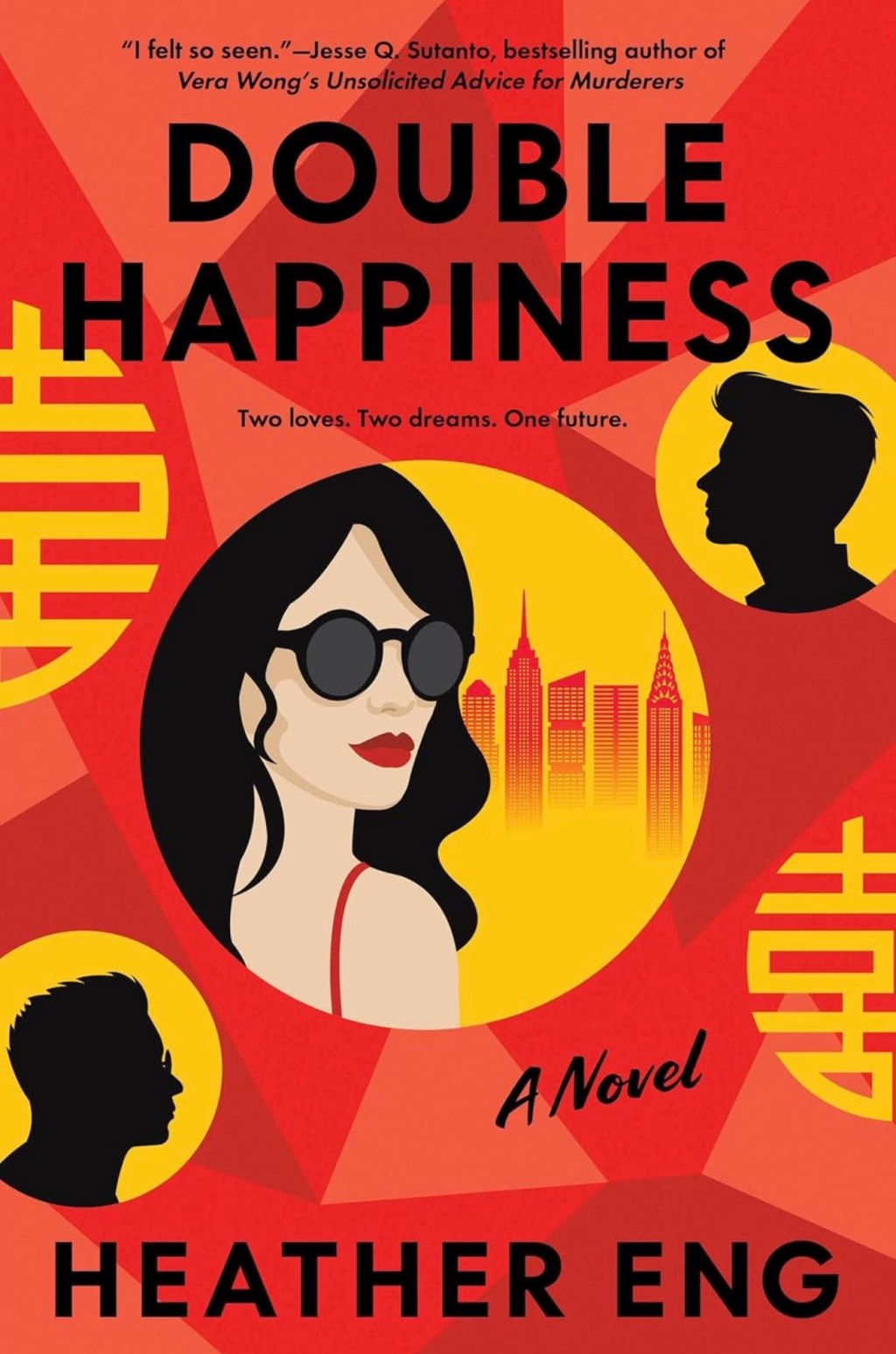
Heather Eng’s Double Happiness is the kind of contemporary fiction that quietly sneaks up on you. What begins as a familiar love triangle story gradually unfolds into something more layered: a thoughtful exploration of burnout, identity, cultural expectations, emotional security, and the difficult process of learning how to choose yourself.
At the center of the novel is Mei Li, a woman who has worked relentlessly to build the stable life she never had growing up. She’s engaged to Joey, dependable and familiar, while simultaneously grinding through exhausting eighty-hour weeks at Livin, a buzzy tech startup that consumes nearly every ounce of her energy. Mei’s life looks successful from the outside, but internally, she feels stretched thin — emotionally disconnected from herself even as she clings tightly to the security she’s fought for.
Then Alexandre Brodeur reenters her life.
Alexandre could have easily become a cliché “what if” romantic interest, but Eng gives him surprising depth and restraint. Rather than relying on dramatic fireworks, their connection develops through conversation, curiosity, and emotional attentiveness. Their chemistry feels intellectual as much as romantic, which makes Mei’s growing attraction believable and complicated in a way that many love triangles fail to achieve.
What makes Double Happiness especially compelling is that the novel isn’t really asking “Which man should Mei choose?” It’s asking whether Mei even knows herself outside of achievement, obligation, and survival mode.
That emotional thread gives the story its strongest moments. Mei’s relationship with work feels painfully realistic, particularly for readers familiar with hustle culture, corporate burnout, or immigrant-family pressure surrounding success and stability. Eng captures the suffocating rhythm of overwork exceptionally well — the way ambition can slowly erode joy while still feeling impossible to walk away from.
The family dynamics also add warmth and authenticity throughout the novel. Mei’s interactions with her sister and extended family ground the story in lived experience, and the cultural nuances woven throughout the book feel organic rather than overly explanatory. There’s a quiet emotional intelligence to the writing that allows even smaller moments to resonate.
If there’s one reason this lands at 4 stars rather than a full 5, it’s pacing. The middle portion occasionally lingers a bit too long in Mei’s internal indecision, and there were moments where I wanted slightly sharper emotional escalation between the characters. Readers expecting a fast-paced romance may also find the story more introspective than dramatic.
Still, the reflective tone is ultimately part of the book’s charm. Double Happiness feels mature and emotionally honest in a way that many contemporary relationship novels don’t. It understands that sometimes the hardest choice isn’t between two people — it’s between the version of yourself built for survival and the version that might actually allow you to be happy.
For readers who enjoy character-driven women’s fiction with emotional depth, complicated relationships, career realism, and thoughtful examinations of identity and ambition, Double Happiness is absolutely worth picking up.
Final Rating: ★★★★☆ (4/5)
A nuanced and emotionally grounded novel about love, burnout, and discovering what it means to truly choose yourself.






Leave a comment