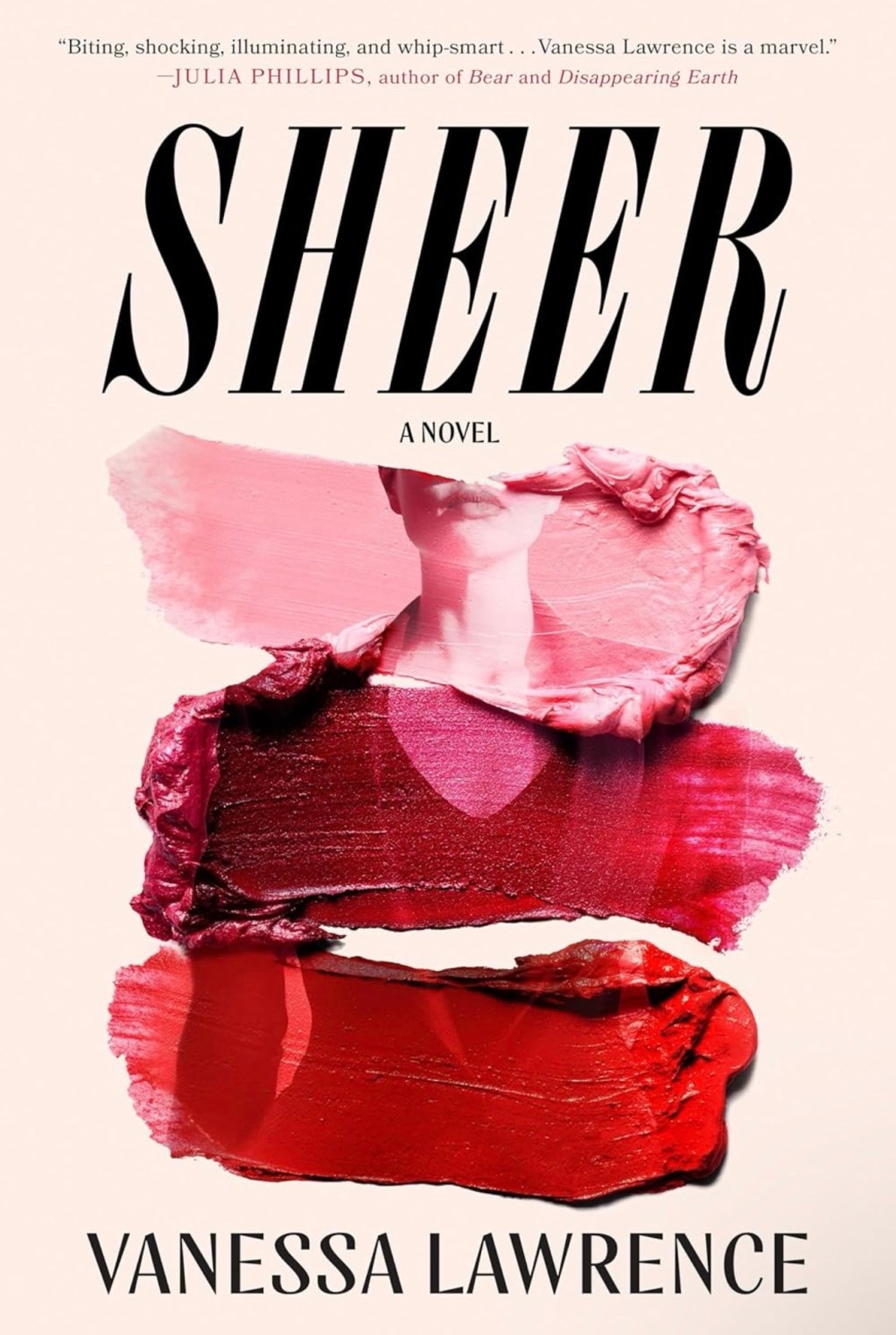
Vanessa Lawrence’s Sheer is the kind of novel that feels both glossy and razor-edged—like the beauty world it so sharply dissects. Told over the course of nine tense days, the book drops readers into the unraveling life of Maxine Thomas, a once-revered beauty founder now sidelined by scandal and forced to confront the story she’s been telling the world… and herself.
At its core, Sheer is about power—how it’s built, how it’s justified, and how easily it can blur into something more dangerous. Max is a compelling, often contradictory narrator. She’s brilliant, obsessive, visionary, and at times deeply frustrating. Lawrence doesn’t try to soften her. Instead, she lets Max speak in her own voice: sharp, defensive, self-mythologizing. It makes for a reading experience that’s immersive and, at moments, unsettling in the best way.
The structure works particularly well. As Max reflects on her rise—from a precocious suburban kid to the force behind a cult-favorite makeup brand—the timeline slowly tightens around the present-day crisis. You begin to see the patterns: the ambition that fueled her success, the compromises she justified, the relationships she strained or sacrificed. The “sheer, dewy look” she champions becomes a smart metaphor for the book itself—everything is about transparency, but only to a point.
What makes Sheer stand out is how relevant it feels. The novel taps into ongoing conversations about founder culture, female leadership, and the complicated expectations placed on women in power. Max is navigating sexism, investor pressure, and her own hidden identity, all while trying to maintain control of a brand built on authenticity. That tension—between empowerment and exploitation—is where the book really lives.
Lawrence also does an excellent job capturing the beauty industry without making it feel superficial. The product language, the branding decisions, the obsession with image—it all feels real, but it’s never just about makeup. It’s about perception. About who gets to define what’s “natural,” what’s “real,” and who pays the price for those narratives.
If there’s any challenge to the book, it’s that Max isn’t always likable. But that’s also the point. Sheer asks you to sit with that discomfort, to question whether likability should even be the metric, especially for women who operate at that level of ambition and control.
By the end, the novel leaves you with more questions than answers—in a satisfying way. Who gets to tell their story? What does accountability really look like? And can someone built on the idea of “sheer” transparency ever truly be honest?
Sheer is smart, timely, and quietly provocative—a novel that lingers long after you’ve finished, like a reflection you can’t quite look away from.





 The Bookish Ashley
Leave a comment